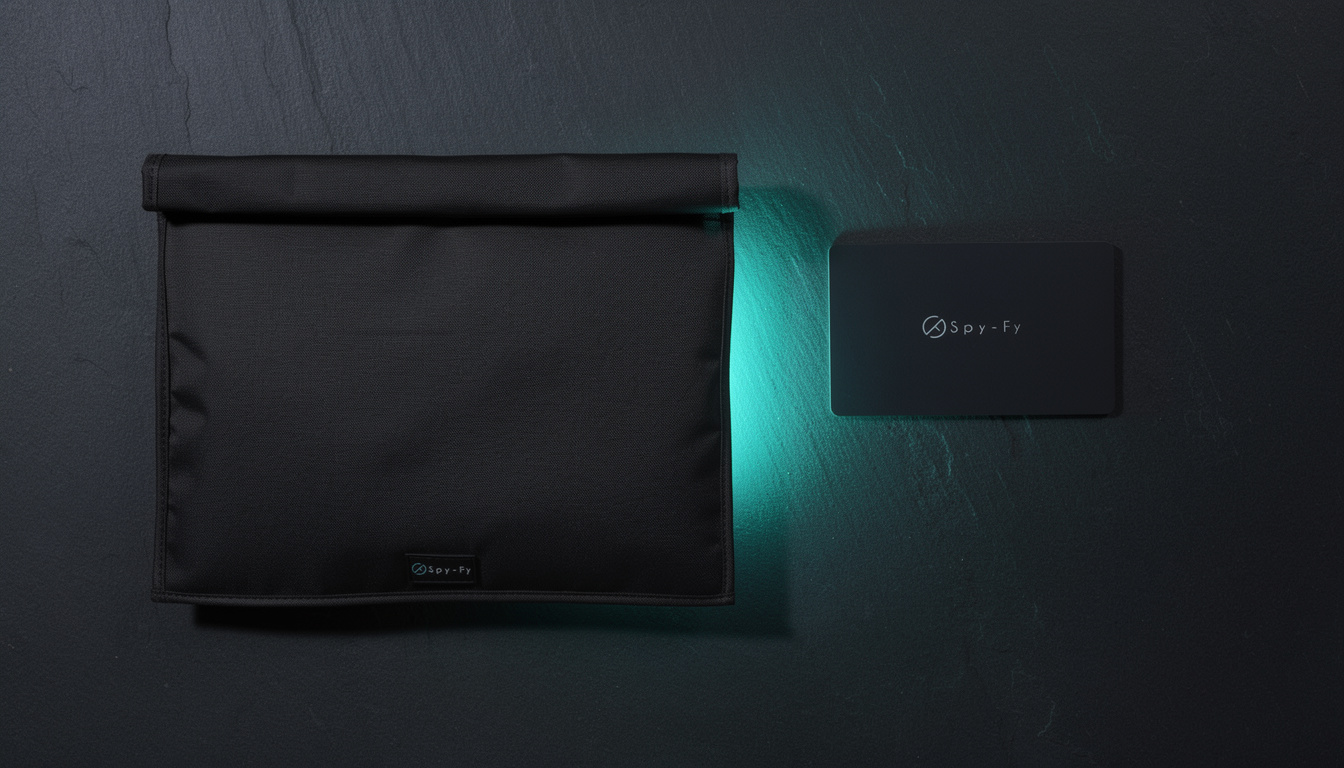
Short answer on faraday bag vs rfid: an RFID wallet blocks passive card skimming at 13.56 MHz. A Faraday bag blocks the entire radio spectrum a phone, key fob, or tracker uses, including cellular, Wi-Fi, Bluetooth, GPS, and NFC. They solve different problems, and the right answer for most privacy-conscious professionals is to own both.
This comparison is written for executives, attorneys, journalists, and healthcare workers who have a specific reason to worry about being tracked, skimmed, or surveilled. If you're weighing a $25 RFID sleeve against a $60 Faraday pouch and wondering whether one replaces the other, the honest answer is no. They protect against different attacks.
For the broader category of physical shielding tools that back up software privacy, browse the Spy-Fy privacy case collection to see where signal blocking fits in the wider setup.
The core difference in one sentence
RFID blocking is frequency-specific. Faraday shielding is spectrum-wide. That single distinction explains everything else in this comparison.
An RFID wallet uses a thin layer of conductive material (often nickel-copper mesh or aluminum) sized and tuned to interfere with the 125 kHz to 13.56 MHz range. That's the band used by contactless credit cards, US passports, hotel key cards, and most office badges. It's a narrow, well-defined target.
A Faraday bag uses multiple layers of tightly woven conductive fabric sealed with an overlapping closure. When closed correctly, it forms a full enclosure that attenuates radio signals across the entire useful spectrum: roughly 100 kHz through 6 GHz and often higher. That covers everything a modern phone or tracker can transmit.
Put simply: every proper Faraday bag is also an RFID blocker, but no RFID wallet is a Faraday bag.
What an RFID wallet actually protects
RFID blocking wallets, sleeves, and cards defend against passive skimming. A skimmer walks past you in a crowd with a reader in a bag or hidden in a bench, and if your card is within a few inches of the antenna, it can capture the card number and expiration date from an unshielded wallet.
The frequencies that matter here:
- 125 kHz, used by older proximity badges and some hotel keys
- 13.56 MHz, used by contactless credit cards, US e-passports, most modern access badges, and NFC on phones
RFID wallets work well against this narrow, real attack. What they do not do:
- Stop your phone from being tracked
- Block cellular, Wi-Fi, Bluetooth, or GPS
- Defeat a relay attack against a car key fob (315 or 433 MHz in the US)
- Prevent IMSI catchers or stingrays from pinging your phone
If your only concern is contactless card skimming in crowded transit hubs, a good RFID sleeve is enough. For the mechanics of how these sleeves interrupt the antenna coupling that skimmers rely on, see the guide on how RFID blocking cards protect your digital wallet.
What a Faraday bag actually protects
A Faraday bag protects against anything that transmits or receives over radio. When your phone or fob is sealed inside a properly constructed bag, it becomes electronically silent and invisible. Nothing gets in, nothing gets out.
Real threats a Faraday bag stops:
- Cellular tracking (700 MHz to 2.7 GHz): IMSI catchers, stingrays, and carrier-level location pings
- GPS (1.2 to 1.6 GHz): hidden AirTags, Tile trackers, GPS bugs in vehicles
- Wi-Fi (2.4 and 5 GHz): probe-request tracking used by mall analytics and hostile networks
- Bluetooth (2.4 GHz): stalkerware pairing, AirTag stalking, proximity beacons
- Key fob relay attacks (315 and 433 MHz): the amplified-signal attack used to steal cars from driveways
- NFC and RFID: because a Faraday bag covers that band too, as a subset
The enclosure geometry matters as much as the fabric. A well-sealed bag with a double roll-top closure performs very differently from a loose flap-and-Velcro pouch, even when the material is identical. For the underlying physics, the explainer on the difference between a Faraday cage and a Faraday bag walks through why the seal is where cheap bags fail.
Side-by-side comparison
| Feature | RFID Wallet | Faraday Bag |
|---|---|---|
| Frequencies blocked | 125 kHz and 13.56 MHz | 100 kHz through 6 GHz+ |
| Blocks credit card skimming | Yes | Yes |
| Blocks GPS tracking | No | Yes |
| Blocks cellular signal | No | Yes |
| Blocks Wi-Fi and Bluetooth | No | Yes |
| Stops key fob relay attacks | No | Yes |
| Holds a phone or laptop | No | Yes |
| Typical US price | $10 to $40 | $40 to $150 |
| Best for | Everyday card protection | Device isolation, travel, sensitive meetings |
RFID blocking vs signal blocking: a decision framework
Choose based on the threat, not the price tag. The difference between faraday bag and rfid protection maps directly to what you're defending against.
Pick an RFID wallet if
- You carry contactless credit cards, an e-passport, or a corporate access badge
- You spend time in crowded environments (transit, conferences, tourist areas)
- You want thin, everyday protection that fits in a back pocket
Pick a Faraday bag if
- You're an attorney or executive traveling to a meeting where phone silence is required by contract or attorney-client privilege
- You're a journalist protecting source confidentiality and need your phone truly offline, not just in airplane mode
- You suspect a hidden tracker (AirTag, GPS unit) is in your bag or vehicle and want to isolate it before you can safely remove it
- You park a keyless-entry vehicle in a driveway and want to defeat relay-amplification theft
- You cross borders and want to prevent forensic tools from pinging your device
Pick both if
You want everyday card protection and the ability to take a phone fully offline when the situation calls for it. That's the setup most privacy-conscious professionals land on. A slim RFID sleeve lives in the wallet; a Faraday bag for phone and laptop lives in the briefcase or car for when it's needed.
What Faraday bags do not do (and neither do RFID wallets)
This is where most competitor comparisons stop short. Being honest about limits matters more than selling a false sense of security.
A Faraday bag does not disable a microphone that is already recording. If malware on your phone is capturing audio to local storage, sealing the phone will prevent that recording from being transmitted in real time, but the file will upload the moment the phone leaves the bag. Faraday blocks transmission, not local capture.
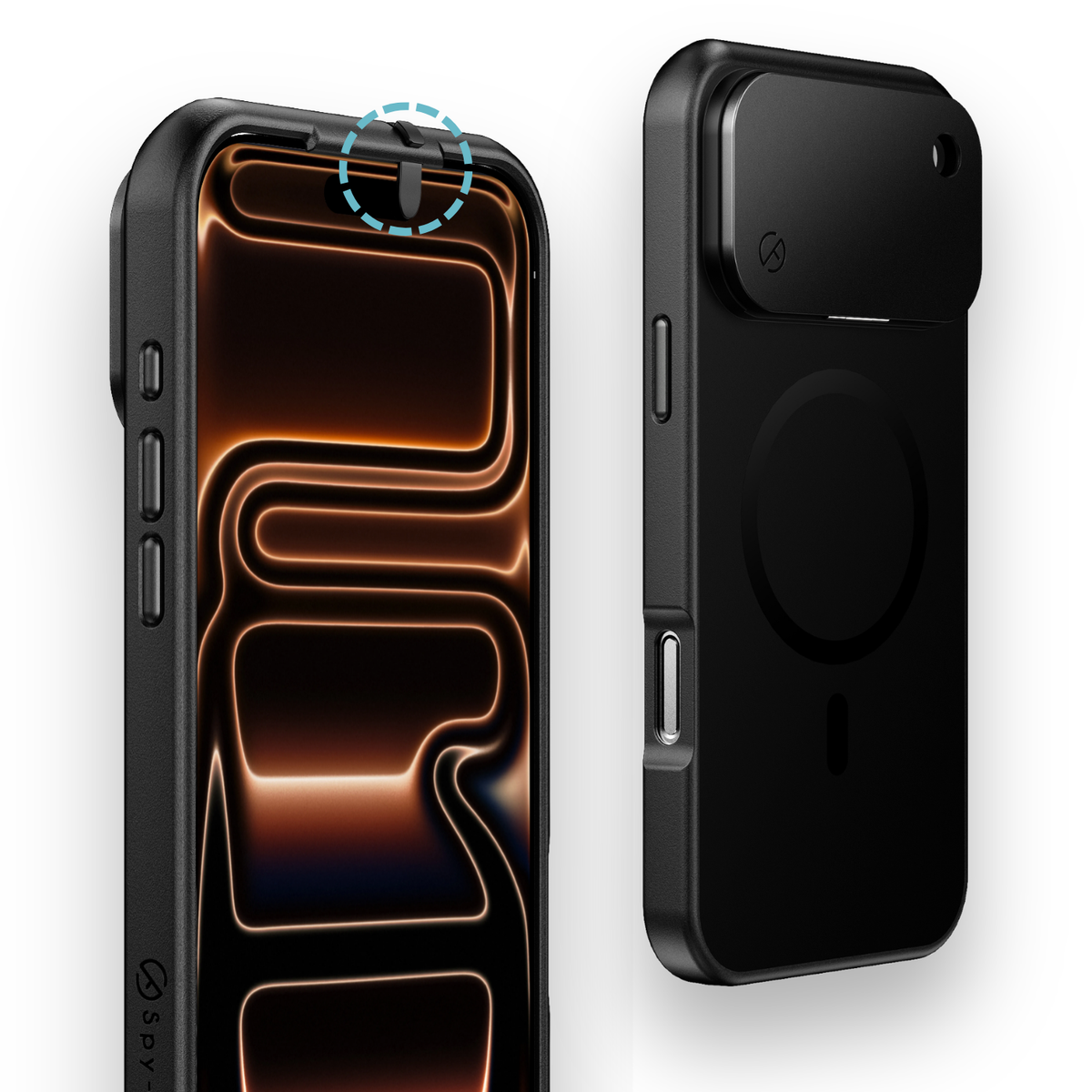
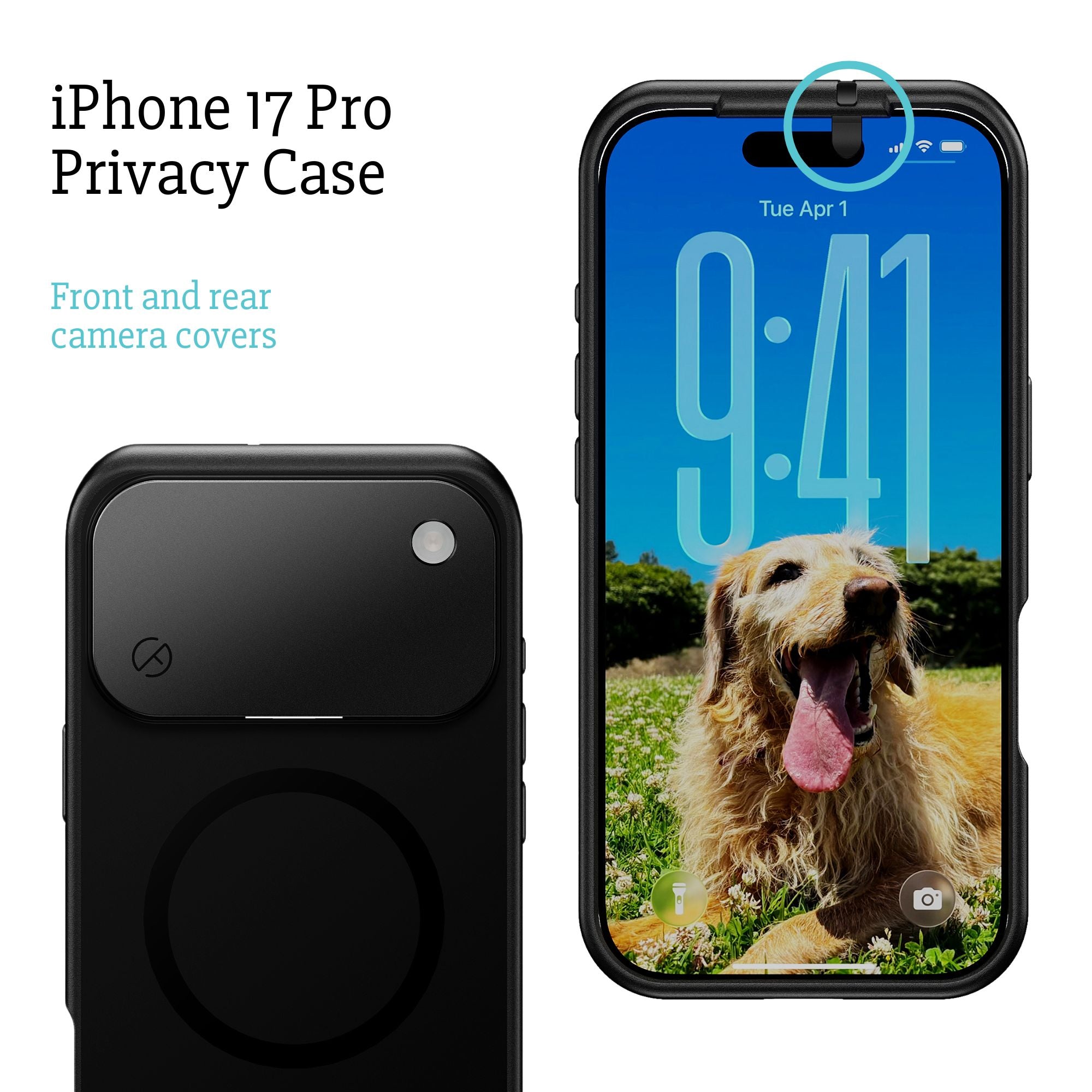
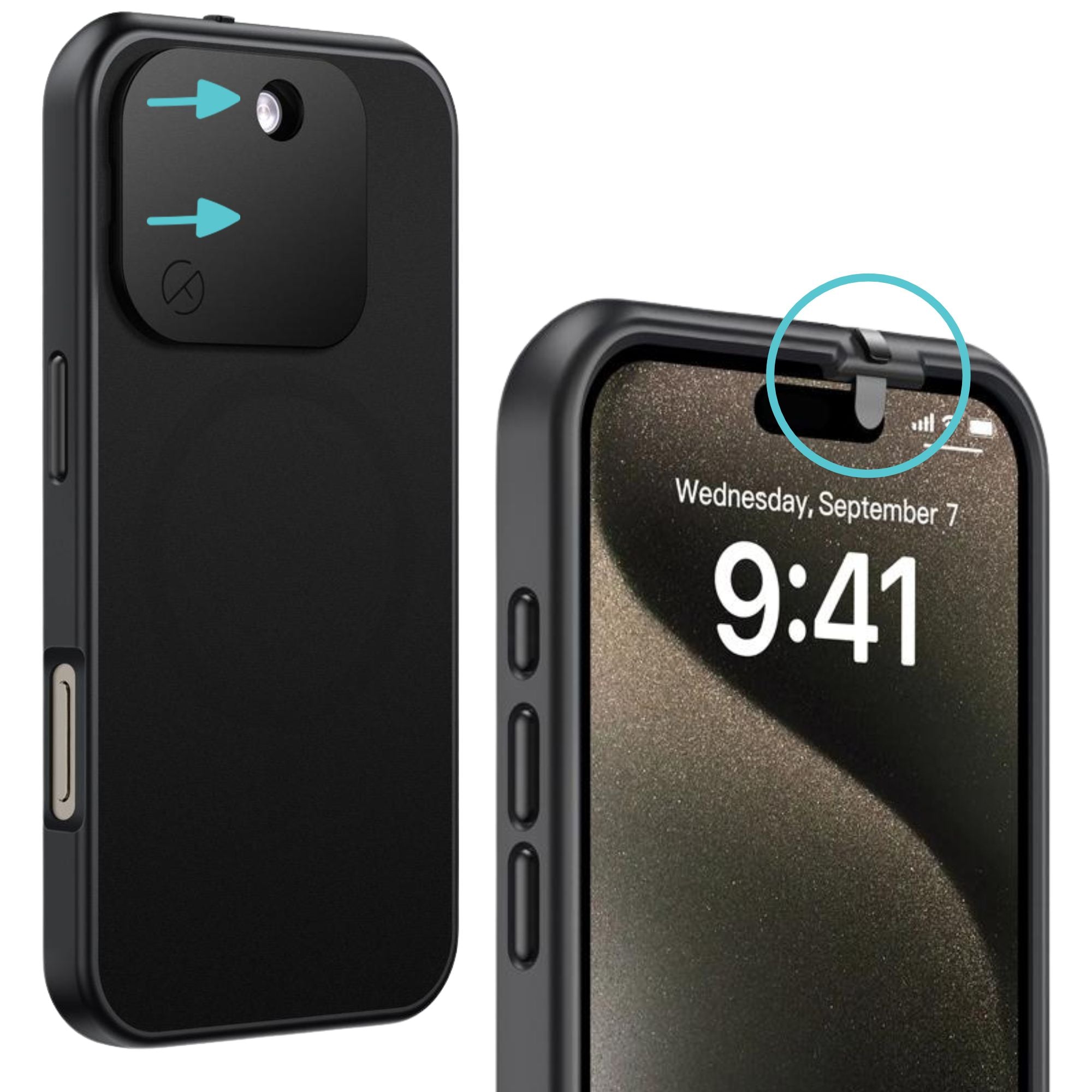
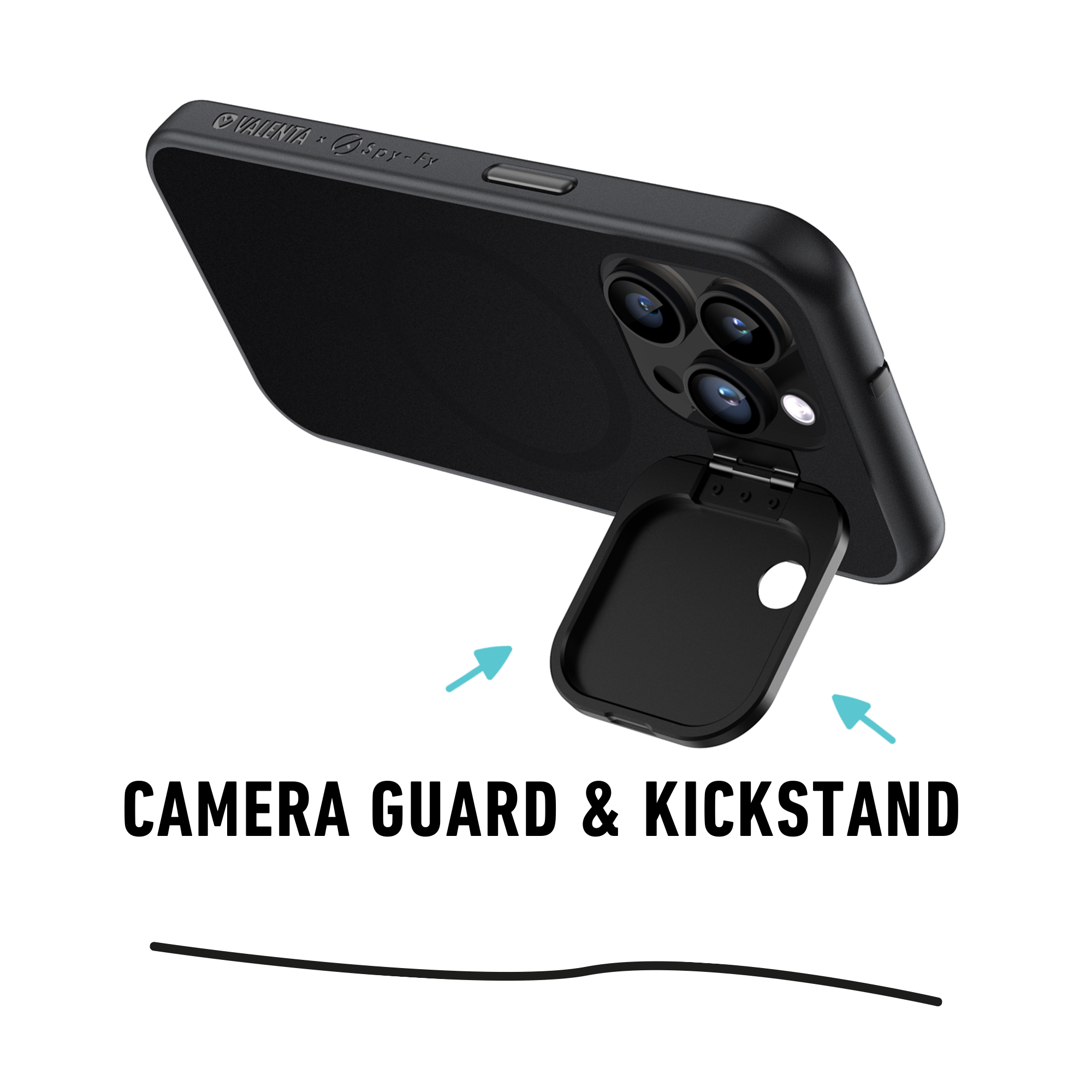
Neither product protects against camera surveillance. If someone is trying to see through your phone's front-facing camera via compromised app permissions, the fix is a physical camera cover, not a signal-blocking bag. A Spy-Fy iPhone 17 privacy case addresses that layer with built-in front and rear camera shutters that malware cannot bypass.
RFID wallets do not block newer, higher-frequency skimming methods. They're tuned to the standards that matter today for cards and passports. If a new standard emerges at, say, 900 MHz for consumer cards, current sleeves will not cover it.
How to test whether your Faraday bag actually works
Any conductive-looking pouch on the market claims to be a Faraday bag. Only some are. Here's a 30-second test using two phones:
- Put phone A inside the bag and fully close the seal (usually a double roll-and-Velcro closure).
- From phone B, call phone A.
- If phone A rings or vibrates, the bag has failed. A working Faraday bag routes the call straight to voicemail because the tower cannot reach the phone.
- Repeat with a Find My or Google Find My Device ping while the phone is inside. The map should show offline or the last known location before you sealed it.
For RFID wallets, tap-testing at a contactless payment terminal with the card inside the sleeve is a fair proxy. If the terminal does not detect the card, the shielding works.
The Spy-Fy take on RFID vs Faraday
Both tools exist because they protect against different attacks. An RFID sleeve is not a downgraded Faraday bag; it's a purpose-built tool for card-skimming defense. A Faraday bag is not overkill for people who want offline privacy; it's the only physical way to guarantee a phone cannot phone home.
Match the product to your actual threat model, not to the highest price tag on the shelf. If contactless card skimming is your only worry, a sleeve is fine. If a phone that cannot be tracked matters even occasionally, add a Faraday bag. If someone might be watching through the camera, add a case with a physical shutter. Explore the full Spy-Fy privacy collection to build the setup that fits how you actually work. Physical privacy tools cannot be bypassed by malware, permissions bugs, or OS updates. That's the whole point.