A faraday shield is a continuous conductive barrier that redistributes an electromagnetic field around an enclosed space instead of letting it pass through. Put a phone inside one and the radio links it depends on, cellular, Wi-Fi, Bluetooth and the Global Positioning System (GPS), are attenuated before they reach the antenna. The shield needs no power and no battery. Free electrons in the conductive layer rearrange themselves in response to the incoming field, and the result is a dramatically weaker field on the inside.
That matters most to people whose location or connectivity is itself sensitive information: executives carrying deal documents through airports, journalists meeting a source who should not be placed at a particular address, attorneys holding privileged conversations in a room full of phones, and car owners whose key fob broadcasts through the front door. For those readers, shielding is a practical control, not a physics curiosity.
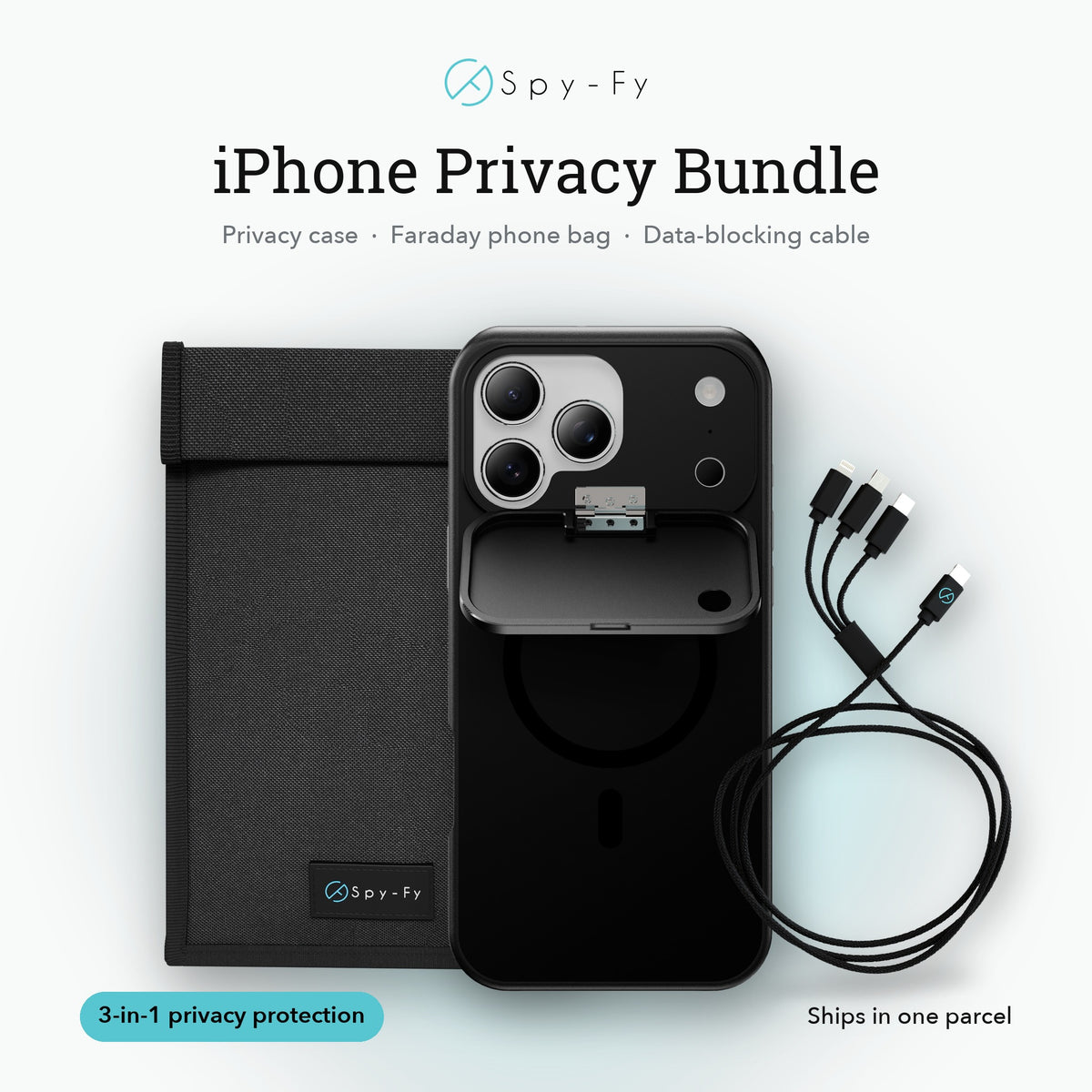
This article settles the terminology, explains the physics in plain language, lists signal by signal what a shield stops and what it cannot touch, and gives you a short test protocol so you can verify a product rather than believe it. If you want the finished object rather than the theory, the Spy-Fy Faraday Bag for phone, laptop and tablet is the consumer version of everything described below.
A faraday shield is a technique, not a single product
Faraday shielding means surrounding something with a conductive enclosure so that external electromagnetic fields are kept out, or internal transmissions are kept in. Michael Faraday demonstrated the principle in 1836. The shield does not need to be thick, exotic or wired to a lightning rod. It needs to be conductive and it needs to be continuous.
A shielded room at a hospital, a metallized fabric pouch in a jacket pocket and a sealed aluminum box all apply the same principle at different scales. What changes is the frequency range they handle and how well the seams hold.
Shield, cage, bag and box are not interchangeable
Retail listings use the four words as synonyms, which is how buyers end up disappointed. A useful working split:
- Faraday shield: the principle, and usually a solid, continuous conductive layer.
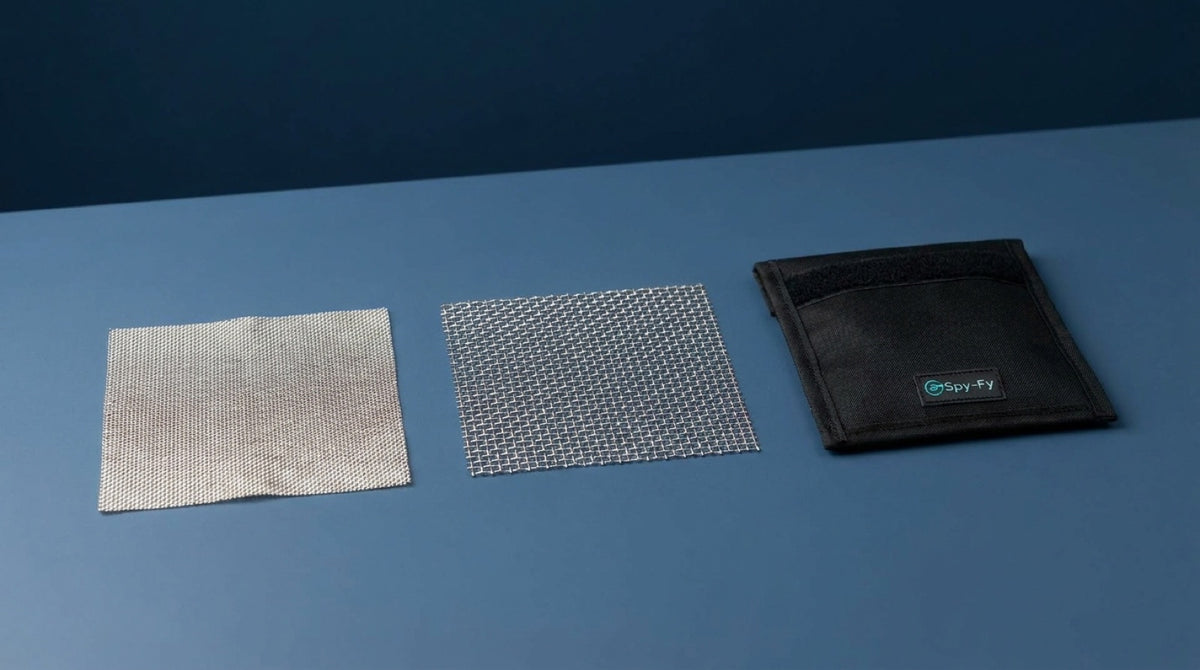
- Faraday cage: the mesh version, where openings are small relative to the wavelength being blocked. The Spy-Fy explainer on how a faraday cage reflects and absorbs radio energy covers that variant in detail.
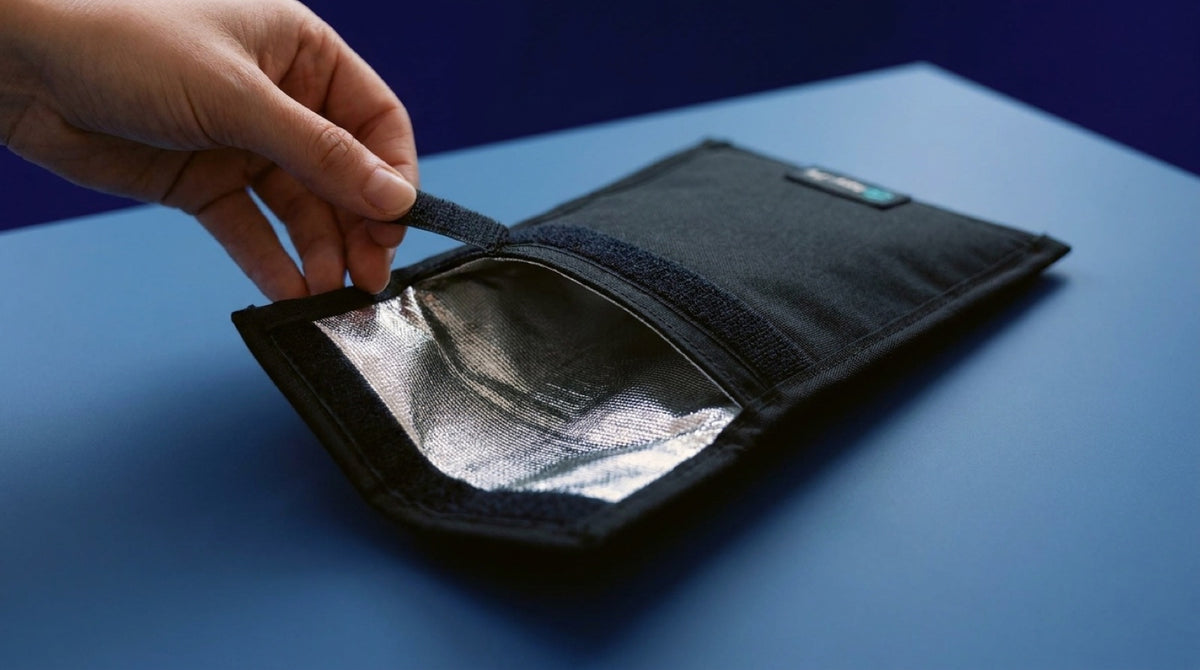
- Faraday bag or pouch: a portable fabric shield with a roll-top or overlapping closure. The closure, not the fabric, is the weak point.
- Faraday box: a rigid enclosure, typically better sealed than fabric and far less portable.
This is also why lab testing matters. The Institute of Electrical and Electronics Engineers (IEEE) publishes Std 299-2006, a standard method that labs use to measure how well a finished shielded enclosure blocks signals, from 9 kHz to 18 GHz. A lab test of the finished product says far more than a number for the fabric alone.
Radio frequency shielding explained
Radio frequency (RF) means the part of the electromagnetic spectrum that carries wireless communication, from kilohertz access badges up to the gigahertz bands used by phones. RF shielding works through two mechanisms: reflection at the conductive surface and absorption within the metal itself. Absorption depends on how deep the signal can travel into the metal. Low frequencies travel deeper, so they need thicker or more magnetic material to stop them.
The practical consequence is counterintuitive. In good conductors, that depth is roughly 20 to 25 micrometers at 10 MHz and under 1 micrometer above 10 GHz. A metallized layer thinner than a human hair can therefore attenuate Wi-Fi and 5G effectively, while the same layer does very little against a slow-changing magnetic field. That is why a lightweight pouch can kill a cellular connection but will not shield a compass or a strong static magnet.
Openings matter more than metal thickness
Shield performance in real products is almost never limited by the metal. It is limited by apertures: seams, zippers, folds and closures. The longer an opening, the more signal leaks through it, and every extra gap makes it worse. At 1 GHz, reaching 20 dB requires an opening no larger than about 15 millimeters. A roll-top folded once instead of three times is not a cosmetic shortcut, it is a hole in the shield.
For comparison, RF Essentials reports that a properly sealed 1 mm solid aluminum enclosure typically delivers more than 80 dB from 1 MHz to 18 GHz, and galvanized sheet steel typically more than 60 dB. Those figures apply to rigid, well-sealed metal enclosures, not to fabric pouches.
How to read a dB claim before you buy
Shielding is measured in decibels (dB). Every 20 dB means the signal that gets through is ten times weaker, so 60 dB leaves a thousandth of the original signal.
Under the IEEE method, the owner of the shield sets the test frequencies and the pass/fail limits in a test plan, so there is no single universal "certified" dB number a product can claim. Apply one buying rule: discount any dB figure that does not name both the frequency range and the test method it was measured under. A bare "80 dB blocking" badge with no band and no standard behind it is marketing, not measurement. Spy-Fy has its bags lab-tested by Applus+ Keystone according to IEEE 299-2006, with an average of 70 dB attenuation across the frequencies phones use. That is the kind of claim you can check, because it names the lab, the method and what was measured.
What a faraday shield blocks and what it cannot touch
A faraday shield is a radio control. It addresses anything that leaves or enters the device as an electromagnetic wave. It does nothing about light, sound, or code already running on the device.
| Signal | Typical frequency | Shield effect |
|---|---|---|
| Cellular Long Term Evolution (LTE) and 5G | Sub-6 GHz bands | Strongly attenuated by a sealed shield |
| Wi-Fi | 2.4 GHz, 5 GHz, 6 GHz | Strongly attenuated |
| Bluetooth and Bluetooth Low Energy (BLE) | 2.4 GHz | Strongly attenuated |
| GPS L1 civil signal | 1575.42 MHz, within the 1559 to 1610 MHz band | Reception strongly attenuated, so no position fix |
| Contactless cards, ePassport chips and near field communication (NFC) | 13.56 MHz | Blocked by radio frequency identification (RFID) blocking material and by a sealed shield |
| Key fob ultra high frequency (UHF) reply in North America | 315 MHz | Attenuated |
| Low-frequency access badges | 125 kHz | Spy-Fy states its Faraday bag does not block this band |
| Microphone audio | Acoustic, not RF | Not blocked. Spy-Fy states the bag does not block sound |
| Camera lens | Optical | Not blocked by any shield |
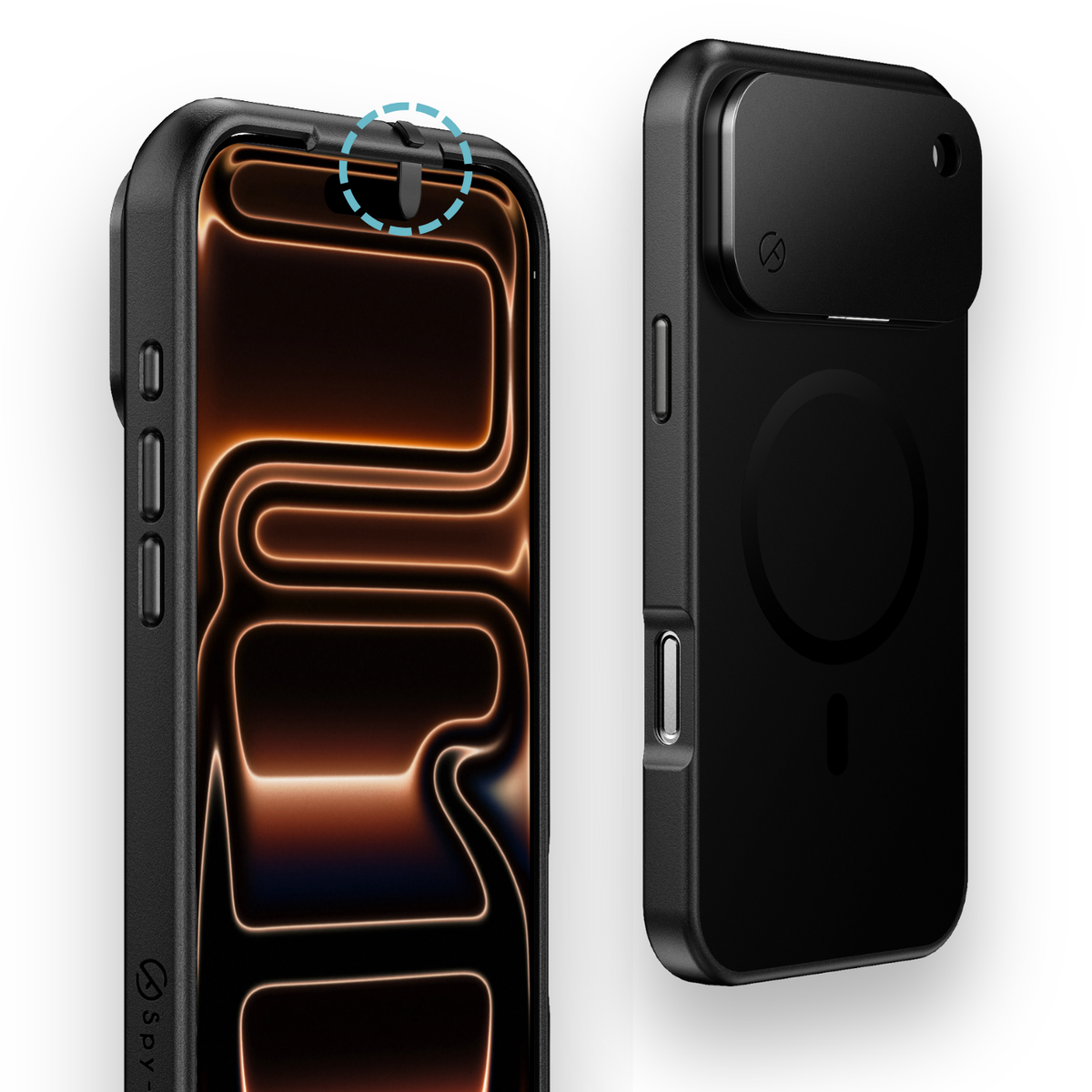
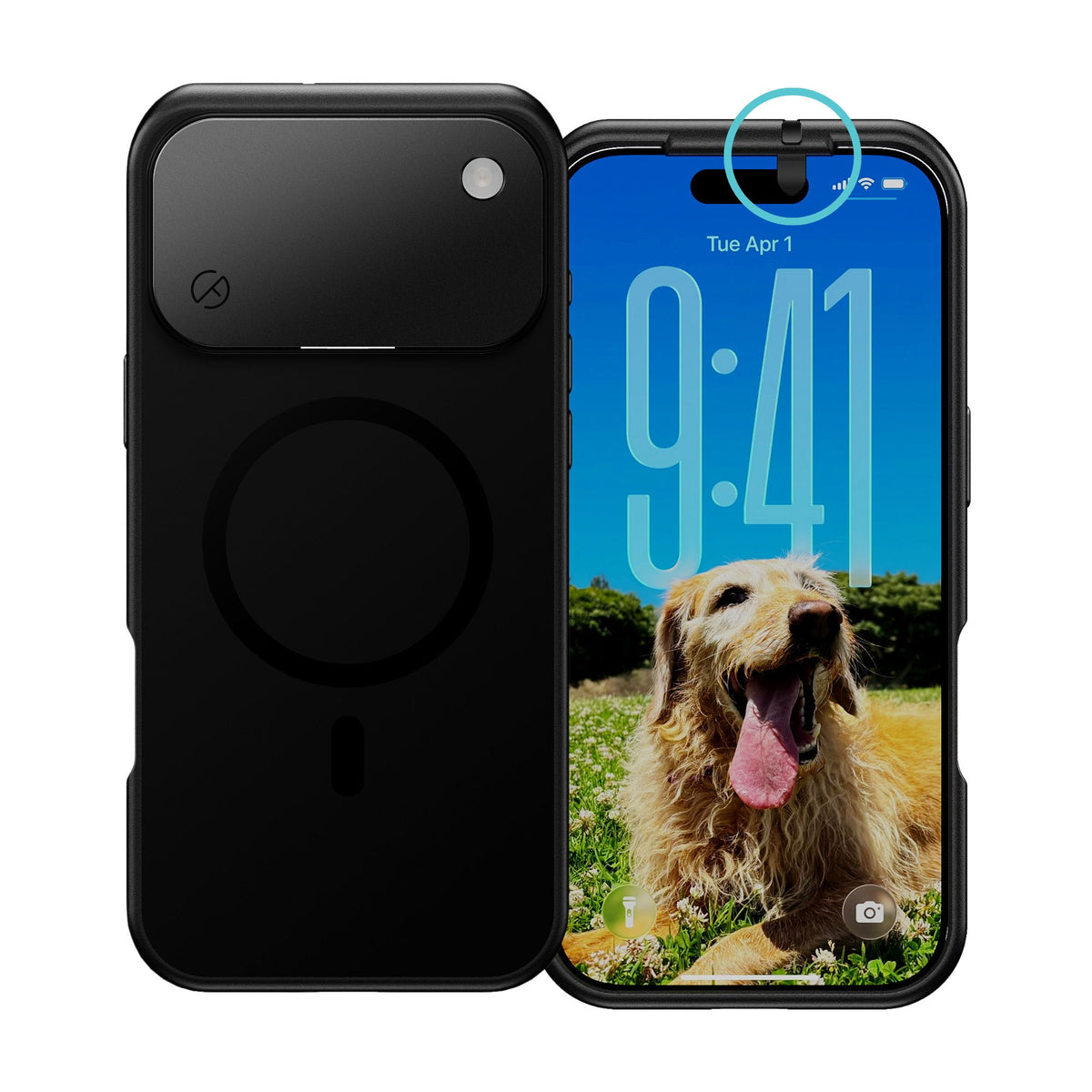
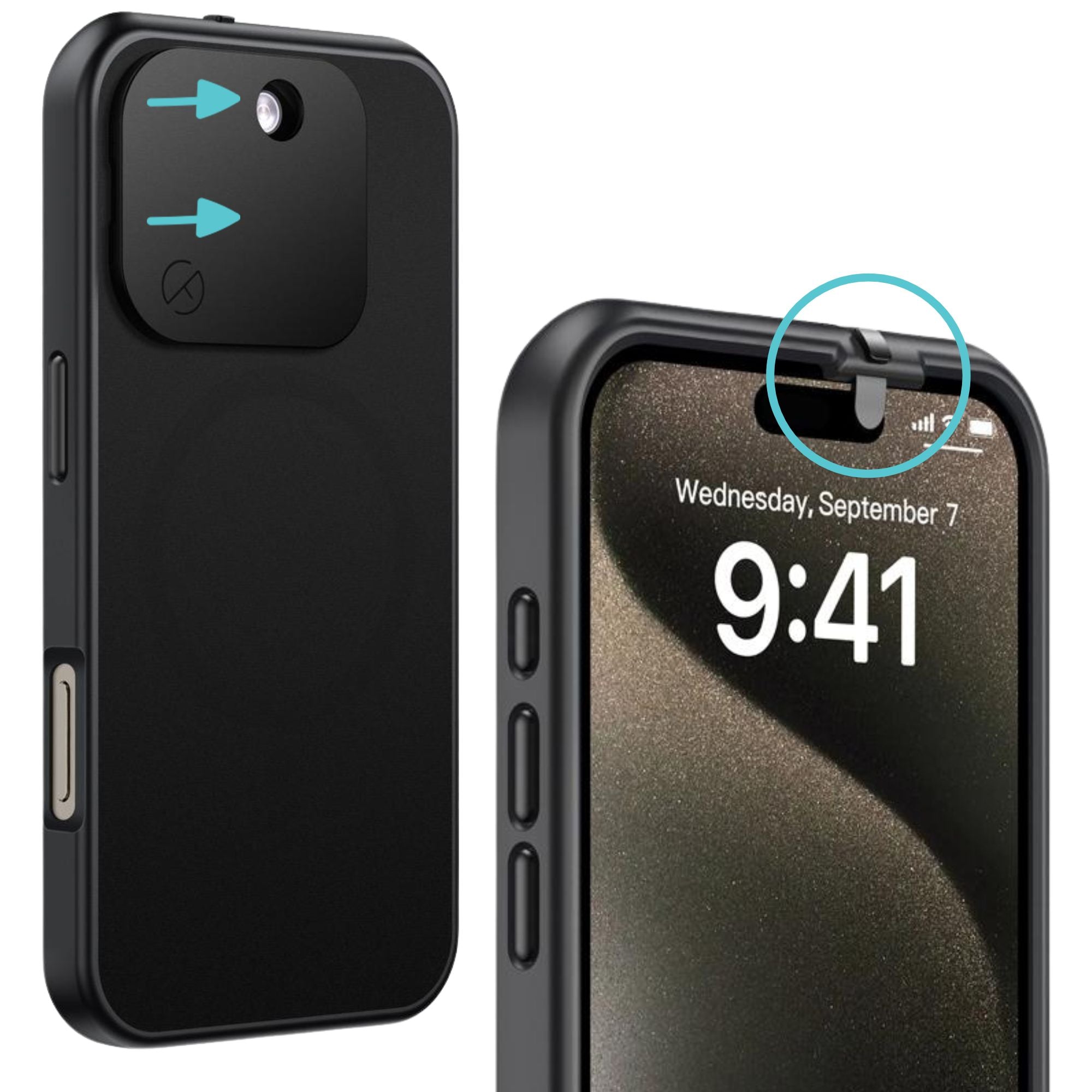
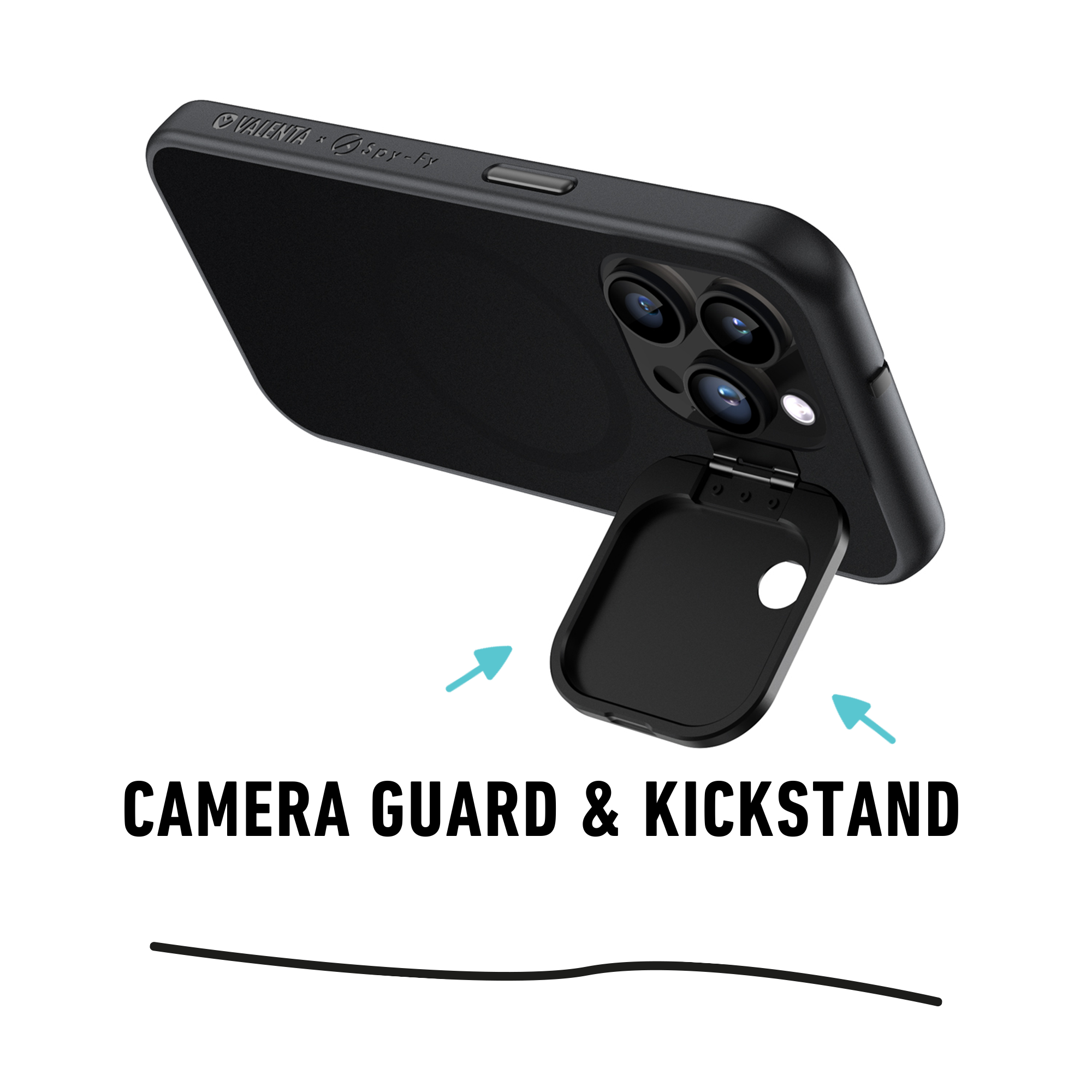
Two honest caveats follow from this. First, the National Institute of Standards and Technology (NIST) states in Special Publication 800-101r1 that faraday containers attenuate the radio signal but do not necessarily eliminate it completely, so a shielded device may still reach a nearby tower. NIST names three reasons shielding fails: material that does not attenuate enough, leaks or seams in the shield, and the conductive shield acting as an antenna. Those three are exactly what a buyer can inspect before trusting a pouch. Second, the camera and microphone are fully functional the moment the device leaves the bag, which is why physical lens covers such as the Spy-Fy privacy cases with built-in camera covers solve a different problem than shielding does. A cover that is physically closed cannot be reopened by malware.
Faraday shielding compared with a faraday bag
Faraday shielding is the physics. A faraday bag is one implementation of it, optimized for portability at the cost of seal quality. A rigid, welded metal enclosure will outperform any fabric pouch, and a fabric pouch will fit in a laptop sleeve. That trade is the entire decision.
Three operational points separate the theory from what actually happens in a pocket:
- Battery drain is real. The Scientific Working Group on Digital Evidence (SWGDE) warns that a shielded phone increases its transmit power while searching for a network, draining the battery faster than normal.
- Cables break the shield. If a charging cable runs out of the bag, the cable can act as an antenna and the device may still connect. Charger and device both have to be inside the shield.
- Airplane mode is not an equivalent. SWGDE guidance from February 2025 notes that airplane mode may leave Bluetooth, Bluetooth Low Energy or Wi-Fi active, or disconnect them only temporarily. NIST lists three isolation methods, airplane mode, powering off, and shielded containers, each with trade-offs.
Powering down does not guarantee silence either. Apple states that with the Find My network enabled, a supported iPhone can still be located for up to 24 hours after it is turned off, and up to five hours in power reserve. Removing the Subscriber Identity Module (SIM) card is not available as a fallback on US iPhone models from the 14 series onward, which use an embedded SIM (eSIM) and have no SIM tray at all. Satellite is a second path most people forget: Apple states that iPhone 14 and later can use Messages via satellite in the US with a clear view of the sky. Only a sealed shield, or a device that is genuinely powered down, takes that link off the table too.
Shielding is also the legal route. Passive shielding contains no transmitter. Operating, marketing, selling or importing an RF jammer violates the Communications Act, with penalties including fines, seizure and imprisonment. A pouch is legal. A jammer is not.
How to test a faraday shield in five minutes
A shield that half works is worse than no shield, because it produces confidence without protection. Run this sequence on any pouch, box or homemade build before you rely on it, and repeat it after a few months of wear when seams and closures start to loosen.
- Call test. Seal the phone inside, call it from a second phone. It should go straight to voicemail with no ring and no vibration.
- Find My test. Ask someone to locate the device while it is sealed. The last known location should freeze and go stale.
- Bluetooth test. Attempt to pair a nearby headset or speaker with the sealed device. Nothing should appear.
- Closure test. Repeat the call test with the roll-top folded only once. If the result changes, your seal technique is doing the work, not the fabric.
- Seam inspection. Hold the empty pouch up to a bright light and look for pinholes, creased fold lines and separating stitching along the opening.
The same protocol exposes why kitchen-foil and biscuit-tin builds usually underperform: the metal is fine, the lid gap is not. The Spy-Fy walkthrough of whether a homemade faraday bag actually works goes through the failure modes in detail.
Where shielding earns its place in a threat model
Shielding is a situational tool used for defined windows, not a lifestyle. Board meetings and non-disclosure agreement (NDA) discussions where every attendee drops a phone in a pouch at the door. Travel and border crossings where a device should be verifiably offline. Source meetings where a journalist does not want a location trail joining two people at one address. Evidence handling, where examiners need isolation and documented conditions.
Car keys are a separate frequency problem. Passive keyless entry uses a low-frequency wake-up around 125 kHz from the vehicle and a UHF reply from the fob, typically 315 MHz in North America. A relay needs the fob's UHF answer, so a sealed pouch that attenuates 315 MHz stops it even though Spy-Fy states its bag does not block the 125 kHz wake-up, and the mechanics are covered in the guide to how a faraday pouch for a key fob stops relay theft. One related note for travelers: the US passport book already has RF-blocking material in its cover, so the chip reads only when the book is open. The passport card has no built-in blocker and ships with a shielding sleeve.
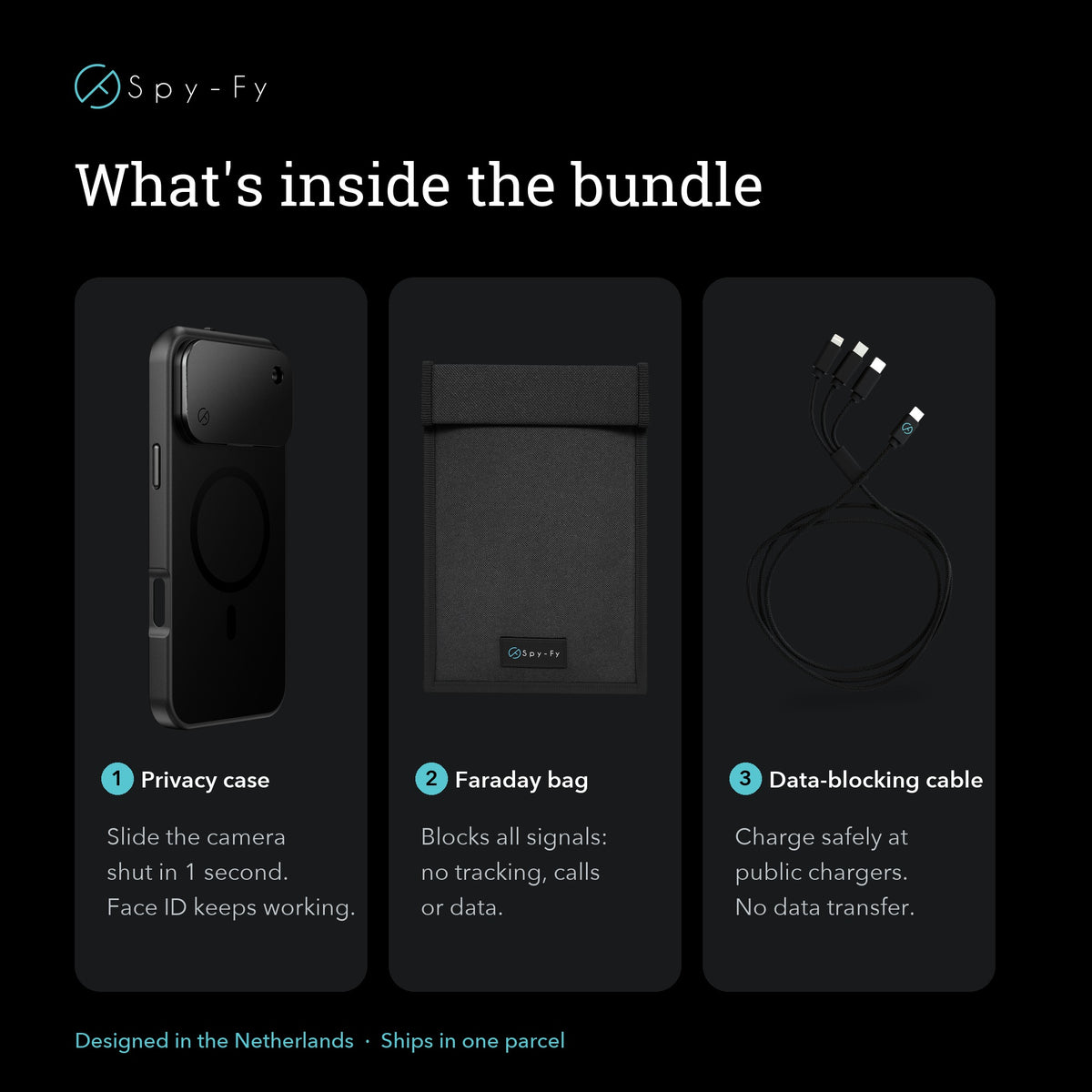
Match the shield to the device, too. The Spy-Fy Faraday bag comes in three sizes, 12 x 19 cm for phones, 33 x 25 cm for tablets and 39.5 cm for laptops. A laptop crammed into a phone pouch does not close properly, and a closure that does not close properly is not a shield.
The takeaway
A faraday shield is a continuous conductive barrier that reflects and absorbs radio energy, and its real-world performance is decided by apertures and closures rather than by how thick the metal is. It will take a phone off cellular, Wi-Fi, Bluetooth and GPS when it is sealed correctly. It will not silence a microphone, it will not cover a lens, and according to NIST it attenuates rather than guarantees total elimination. Test yours instead of trusting the packaging.
Use the two controls together. A sealed faraday bag handles radio during the windows that matter, and a physical camera cover handles optics the rest of the time, which is where the Spy-Fy privacy case collection with built-in camera covers takes over. Radio silence and a closed lens cover two different attack surfaces, and most people only protect one.